



Diogo Pinho, PhD | R&D Coordinator, Monte Silveira Farm | Portugal Living Lab Coordinator, GroundWork
Two Mission Soil projects, one farm: how TRAILS4SOIL and GroundWork meet at Monte Silveira.
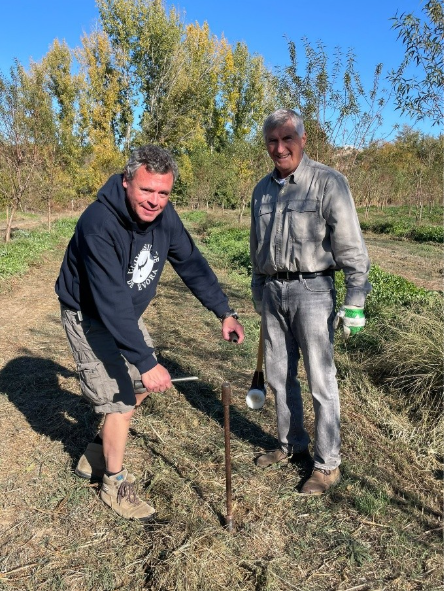
On 3 November 2026, University of Évora researchers visited and sampled soil in the organic almond orchard at Monte Silveira Farm, This Portuguese farm is involve in GroundWork Project as one of the project Living Lab, lead by the farm R&D coordinator, and is a working site for another Horizon Europe Project , TRAILS4SOIL Permanent Crops Living Lab.
One farm, two sister projects
TRAILS4SOIL and GroundWork are Horizon Europe projects contributing to the EU Mission “A Soil Deal for Europe” (Mission Soil). They work with different production systems, permanent crops in one case and regenerative livestock grazing in the other but share the same approach: testing soil-friendly practices on working farms, together with the farmers who manage them.
What happened in the field
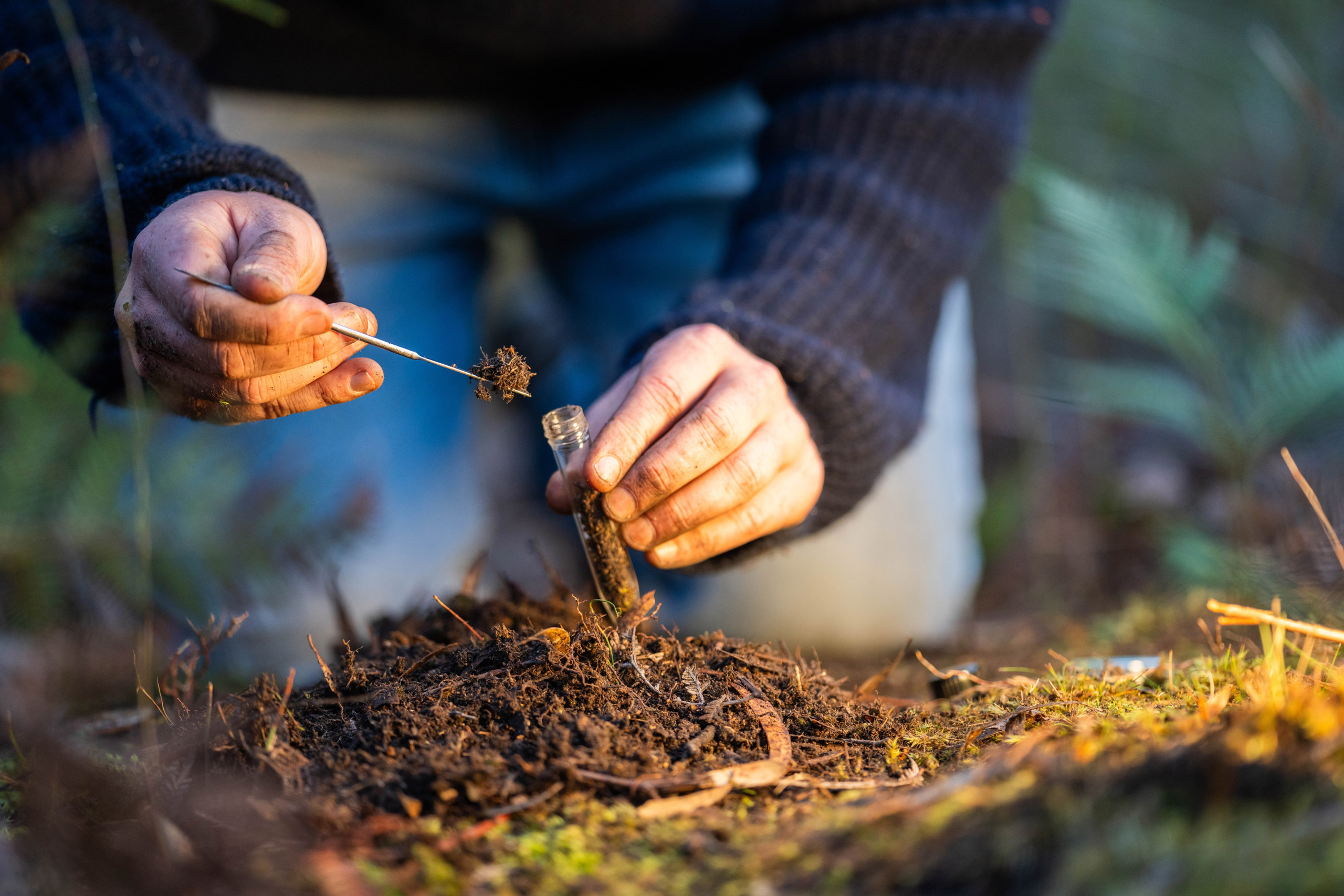
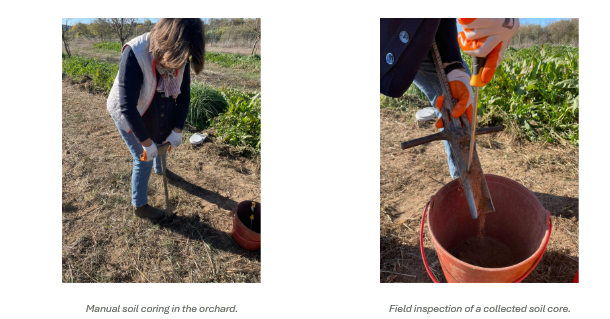
The photographs capture a hands-on process. Researchers used manual soil sampling tools to extract soil from the orchard floor, transferred the collected material into containers, and prepared it for subsequent assessment. The work took place among young almond trees, with green vegetation and plant residues visible on the ground. Field sampling is a fundamental step in soil monitoring: it provides material for laboratory investigation and helps establish a reference against which future observations can be interpreted. At this stage, samples have been collected, but analytical results are not yet available, so no conclusions about the impact of the practices can be drawn.
Why regenerative almond farming matters
Permanent crops such as almonds can be particularly vulnerable to Mediterranean conditions, including prolonged drought, intense rainfall events and low soil organic matter. Regenerative management seeks to address these challenges by supporting soil cover, limiting unnecessary disturbance, encouraging biological activity and improving the cycling of organic matter. These are promising approaches, but their effects depend on local soils, climate and management decisions. TRAILS4SOIL creates an opportunity to assess those effects systematically rather than relying on assumptions. The project’s Spain–Portugal Living Lab specifically focuses on more sustainable permanent cropping systems, including almond orchards.
Connecting farmers, science and Living Labs
or our farm, an important part of this collaboration is the exchange between researchers and people managing the land every day. Sampling provides the scientific evidence; the farmer contributes knowledge of field history, operational constraints and how practices are implemented. Together, these perspectives can help make recommendations both credible and practical. Both, TRAILS4SOIL and GroundWork promote learning in real farming environments and collaboration between farmers, researchers and other stakeholders. Together, they encourage useful questions about how soil cover, farm biodiversity and land management can support healthier soils across different production systems.
Next steps: measuring change over time
The November visit is one step in a longer process of monitoring, interpretation and learning. The next stages will depend on the planned analyses and the project’s fieldwork programme. As evidence becomes available, we hope to better understand which regenerative practices are most relevant to soil function, environmental resilience and the long-term viability of Mediterranean almond production. By sharing both the work in progress and, eventually, the findings, we want to contribute to practical knowledge that other farmers can use and adapt to their own conditions.
Fieldwork photographs
The sampling sequence shows soil collection and sample handling in the orchard.
Project links
TRAILS4SOIL: https://trails4soil.eu | Permanent Crops Living Lab: https://trails4soil.eu/living-labs/permanent-crops/
GROUNDWORK: https://www.linkedin.com/company/groundwork-eu